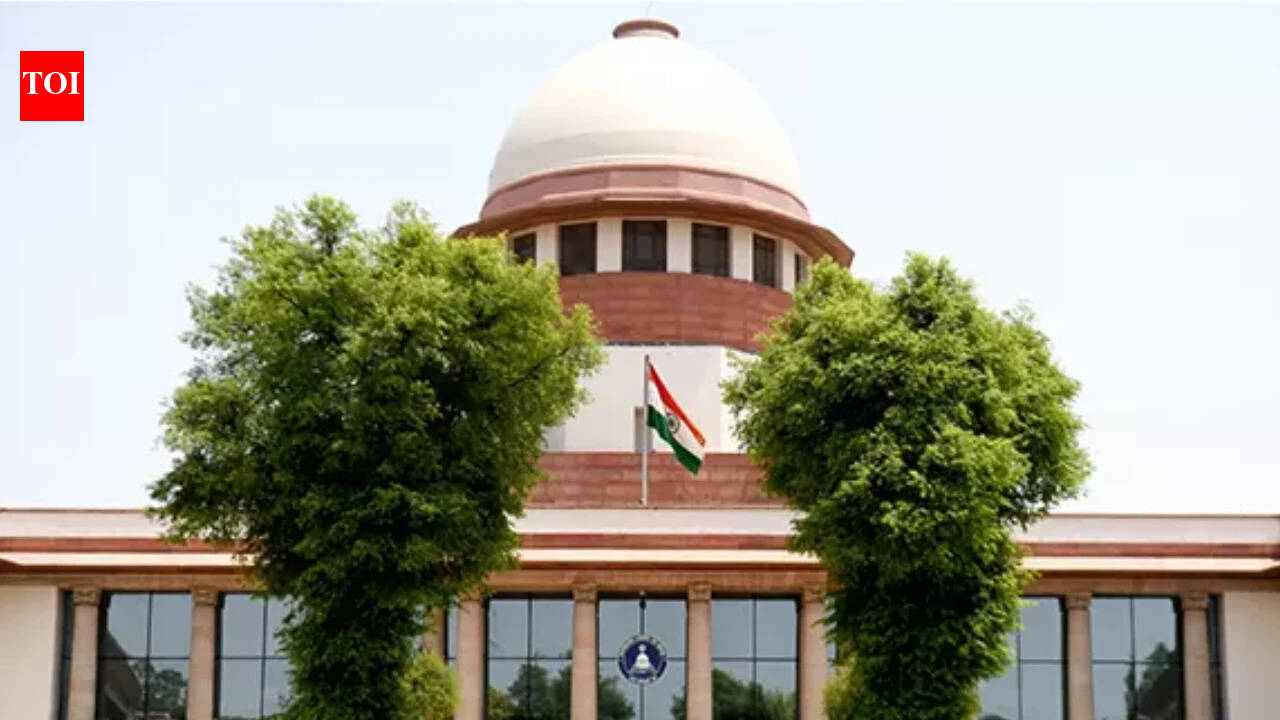

SC to CBSE: Exempt Class VI from 3, language education policy this year
The Supreme Court on Monday directed the Central Board of Secondary Education to exempt Class VI students from the three, language policy for the current academic year, providing significant relief to students and parents who had raised concerns about the abrupt implementation of the new curriculum requirement. The order means that students currently enrolled in Class VI under the CBSE system will not be required to mandatorily select a third language, which under the policy framework would have involved choosing two Indian languages in addition to the existing language subjects. The direction came in response to petitions challenging the CBSE's circular that sought to implement the three, language formula, a key component of the National Education Policy 2020, from the current session. The court's intervention effectively pauses the enforcement of the policy for this specific cohort while the larger legal and policy questions surrounding its implementation remain under examination.
The three, language formula has its roots in the National Education Policy of 1968 and was subsequently reinforced by the NEP 2020, which recommends that students learn at least three languages, with at least two being native to India. The policy is aimed at promoting multilingualism and preserving India's linguistic diversity, but its implementation has been contentious, particularly in states where the choice of languages intersects with regional identity politics. Tamil Nadu, for instance, has historically opposed the imposition of Hindi through the three, language formula, and similar concerns have been raised in other non, Hindi, speaking states. The CBSE circular that triggered the latest round of litigation sought to operationalise the policy for Class VI students, prompting objections from parents and educationists who argued that it was introduced without adequate preparation or consultation.
The petitioners contended that the CBSE's circular was issued hastily and without providing schools and students sufficient time to adapt to the new requirement. They argued that the sudden mandate placed an undue burden on young students who were already coping with the demands of the school curriculum, and that it failed to account for the logistical challenges faced by schools in arranging teachers and materials for additional language subjects. The court, while issuing the interim direction, is understood to have taken note of these concerns and the potential disruption that a mid, session change could cause to students' academic progress. The exemption applies specifically to Class VI students for this academic year, meaning that the policy's applicability to other classes and future academic sessions remains a matter that could be revisited.
The order has been welcomed by parent associations and opposition, ruled states that have been vocal critics of the three, language policy. Educationists have noted that the exemption provides breathing room for a more measured rollout of the policy, allowing stakeholders to address practical challenges before it is enforced more broadly. Some observers have pointed out that the court's intervention underscores the need for greater consultation between central education authorities and state governments, particularly in a federal setup where education is a subject in the concurrent list. The development also highlights the ongoing tension between the Centre's push for a uniform national education framework and the diverse linguistic and cultural priorities of individual states.
The three, language debate is part of a broader national conversation about the role of language in education, identity, and opportunity in India. The NEP 2020 envisions a flexible approach to language learning, but its implementation has often run into political headwinds, especially in states where linguistic identity is closely tied to regional politics. The Centre has maintained that the policy is not aimed at imposing any particular language, including Hindi, and that students retain the freedom to choose their third language from a range of options. Critics, however, argue that the practical operation of the policy in CBSE, affiliated schools often leaves little real choice, particularly in regions where the availability of language teachers and resources is limited.
Historically, the three, language formula has been a flashpoint in Indian education policy since the 1960s, when the Kothari Commission recommended it as a means of promoting national integration and linguistic harmony. Tamil Nadu's long, standing resistance to the formula, rooted in the anti, Hindi agitations of the 1960s, led to the state adopting a two, language policy that continues to this day. Similar tensions have surfaced periodically in other states, including Karnataka and West Bengal, whenever proposals to expand language requirements have been floated. The Supreme Court's latest intervention is therefore not an isolated event but part of a recurring pattern of legal and political contests over language policy in Indian education.
The CBSE is now expected to issue a formal notification or circular in compliance with the Supreme Court's direction, clarifying the exemption for Class VI students and outlining how schools should proceed for the remainder of the academic year. The broader legal challenge to the three, language policy is likely to continue, with further hearings expected in the coming months, and the outcome could have implications for how the NEP 2020's language provisions are implemented across the country. Stakeholders, including state governments, school managements, and parent bodies, will be watching closely to see whether the court's interim relief translates into a more permanent exemption or leads to a revised, more consultative framework. For now, Class VI students and their families can proceed with the current academic year without the immediate pressure of complying with the three, language requirement, even as the larger policy debate remains unresolved.