
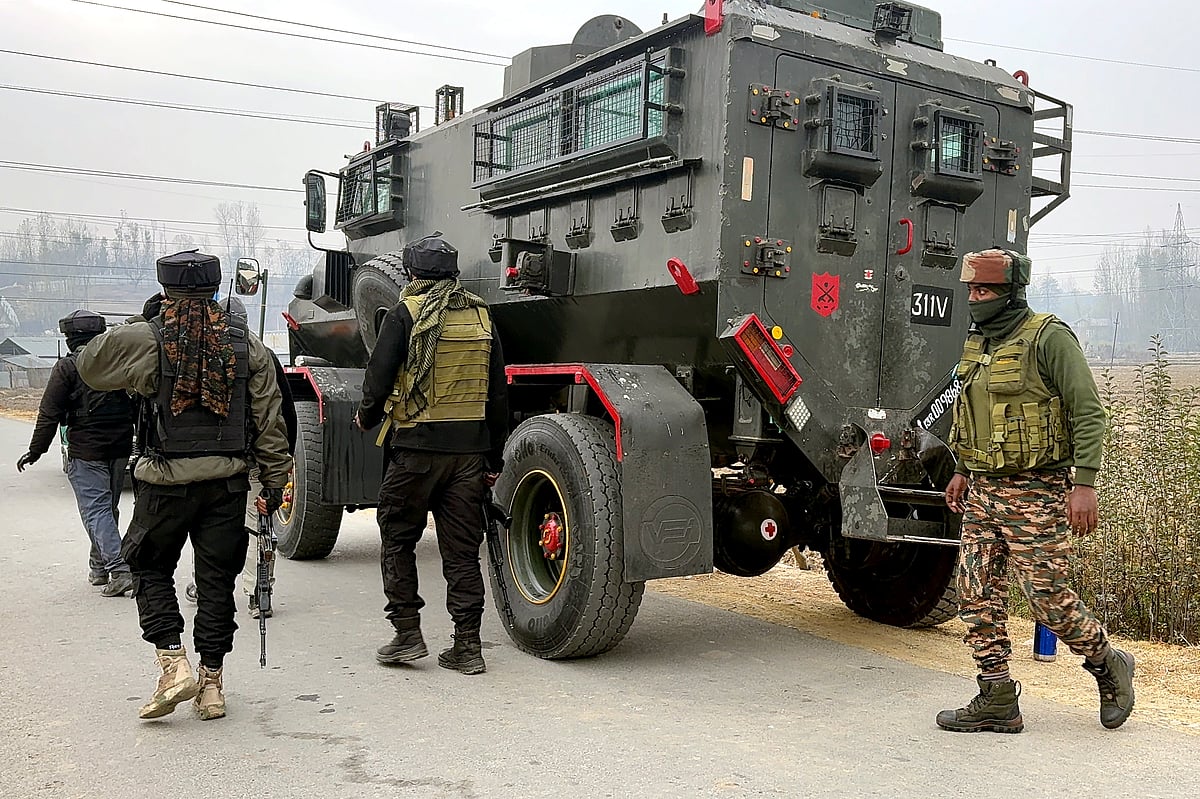
Security forces continue search for attackers who shot at CRPF checkpoint in Kulgam
Security forces in Jammu and Kashmir have launched an extensive manhunt for the motorcycle-borne assailants who opened fire at a Central Reserve Police Force checkpoint in the Kulgam district of south Kashmir, injuring three personnel. The attack took place on Wednesday when two unidentified gunmen riding a two-wheeler approached the checkpoint and fired at the stationed personnel before fleeing the scene. The injured CRPF jawans were immediately shifted to a medical facility for treatment, where their condition is reported to be stable. Security has been significantly beefed up across the district following the incident, with additional checkpoints established and patrols intensified in the area. The search operation is focused on tracking down the fleeing attackers, with forces combing the surrounding areas for leads.
The attack in Kulgam is part of a continuing pattern of targeted strikes against security installations in the Kashmir Valley, where militants have periodically attempted to hit checkpoints and convoys. South Kashmir, which includes Kulgam, has historically witnessed a higher concentration of such incidents owing to the presence of militant networks operating in the region's apple orchards and forested belts. Wednesday's firing comes amid a broader security review in the Union Territory, where forces have been maintaining a heightened alert posture. The assailants' use of a motorcycle reflects a recurring tactic aimed at ensuring quick entry and escape from the site of attack. Investigations into the incident are underway, with forensic teams examining the spot for evidence.
According to the available information, three CRPF personnel sustained injuries in the firing and were evacuated to a hospital for medical attention. The checkpoint was reportedly manned by CRPF personnel deployed for routine security duties in the area at the time of the strike. Officials have indicated that the attackers fired from close range before speeding away, and the investigation is examining the direction of their escape route. No formal claim of responsibility for the attack has been established by any group so far in the immediate aftermath. The exact sequence of events remains under investigation, and the identification of the assailants is a key focus of the ongoing probe.
Deputy Chief Minister Surinder Choudhary strongly condemned the attack, describing it as an assault on the security apparatus of the region, and wished the injured personnel a speedy recovery. His reaction was among the first from the political leadership in Jammu and Kashmir, signalling the administration's concern over the strike on a centrally deployed force. The attack has renewed focus on the security challenges facing the Union Territory amid political engagement between the government and various stakeholders. Public figures across the spectrum have generally voiced solidarity with the injured personnel and called for a thorough investigation. The incident also underscores the risks faced by security personnel manning checkpoints in the hinterland.
The Kulgam firing fits into a wider pattern of security incidents in the Union Territory that authorities track closely, and it comes at a time when the central government and the Union Territory administration have been emphasising improvements in the law-and-order situation. Checkpoint attacks are viewed as attempts to disrupt this narrative and to signal the continued capacity of militant outfits to strike at symbols of state authority. The deployment of CRPF personnel at highway and interior checkpoints remains a critical component of the counter-insurgency grid in Kashmir, making such posts vulnerable targets. Security agencies regularly adapt their standard operating procedures in response to changes in militant tactics. The incident is expected to feed into higher-level security reviews of checkpoint deployments across south Kashmir.
Wednesday's attack evokes earlier episodes in which unidentified gunmen on motorcycles targeted security personnel at checkpoints and select locations across the Valley, including strikes that prompted tightening of vigil at vulnerable points. Historically, south Kashmir has accounted for a significant share of such security encounters, and forces have often cited the region's topography and dense orchard cover as factors complicating interception of fleeing attackers. The repeat use of two-wheeler-based hit-and-run strikes has prompted forces to revise escort and picket protocols from time to time. While no group has been identified in connection with the current incident, the similarity in method with past strikes is likely to inform the investigative approach. Comparisons with previous incidents also highlight the difficulties of preventing surprise attacks on open checkpoints.
The immediate priority for the security establishment is to track down the fleeing assailants and establish the identity of the motorcycle used in the attack, with patrols and checkpoints tightened across Kulgam and adjoining areas. Investigators are expected to examine possible patterns matching similar past strikes and coordinate with intelligence agencies to develop leads. The injured personnel are under medical observation, and their condition will be monitored closely in the coming days. Depending on the findings, the security apparatus may reassess checkpoint positions, strengthen personnel levels, and improve protective measures at vulnerable posts. Politically, the incident is likely to keep the security situation in Jammu and Kashmir in focus, with the administration under pressure to demonstrate both a firm response and visible accountability in the investigation.