Investment momentum holds, execution remains the real test
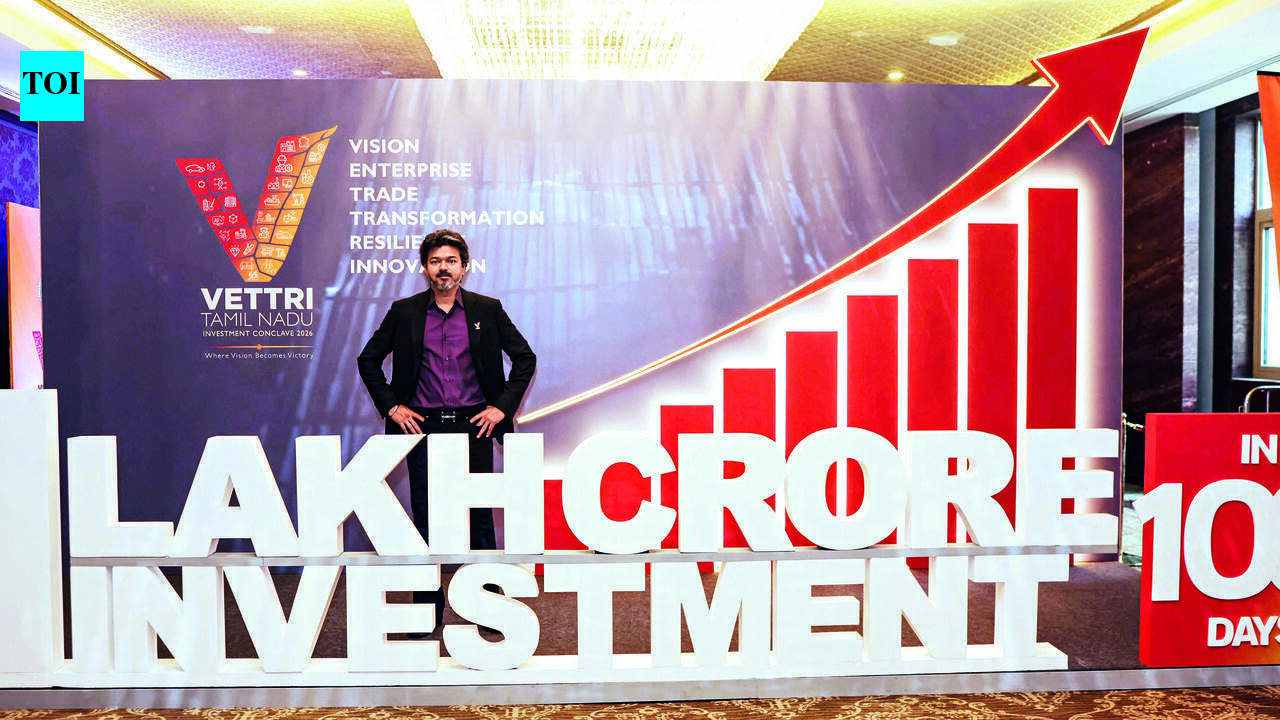
The Tamil Nadu government has signed memoranda of understanding worth approximately ₹1.02 lakh crore since assuming office, according to official announcements, even as questions mount over whether these commitments will translate into tangible industrial activity on the ground. The government has simultaneously introduced a 21-day single-window approval mechanism for investment proposals and constituted a dedicated investment panel to fast-track clearances. The scale of the MoUs signals an aggressive push to position the state as a premier destination for domestic and foreign capital. However, the real test lies not in the signing ceremonies but in execution, job creation, infrastructure readiness, and the state's ability to hold its own in an increasingly competitive race with neighbouring Andhra Pradesh for major industrial projects.
The context behind this investment drive is significant. Tamil Nadu has long been one of India's most industrialised states, with a strong presence in automobiles, electronics, textiles, and engineering. In recent years, however, competition for large-ticket investments has intensified, with states across the country rolling out red-carpet incentives, land banks, and expedited approval processes. Andhra Pradesh, in particular, has actively courted major manufacturers with competitive land and power packages, creating a rivalry that has become a defining feature of southern India's industrial landscape. Against this backdrop, the Tamil Nadu government's emphasis on speed of approvals appears designed to signal that the state can match both the ambition and the efficiency of its competitors.
The government's 21-day approval framework is central to its pitch. Under this mechanism, investment proposals that meet specified criteria are expected to receive clearances within a defined three-week window, reducing the procedural delays that have historically frustrated investors. The newly constituted investment panel is intended to oversee this process, resolve inter-departmental bottlenecks, and provide a single point of accountability. Officials have described the MoUs as spanning multiple sectors, including manufacturing, renewable energy, and electronics, though the precise distribution of the committed investment has not been fully detailed. What remains unclear is how much of the announced figure represents firm commitments as opposed to preliminary expressions of interest, a distinction that often determines whether MoUs become operational projects.
Reactions to the developments have been mixed. Industry bodies have broadly welcomed the single-window mechanism and the stated commitment to faster clearances, noting that predictability in approvals is often as important to investors as fiscal incentives. Opposition parties, however, have urged caution, pointing out that MoUs signed in previous years have not always materialised into ground-breaking ceremonies or employment generation. Analysts have noted that the credibility of the investment drive will depend on transparent reporting of conversion rates, land availability, and the actual commencement of construction. The stakes extend beyond optics: job creation remains a politically sensitive issue in the state, and any gap between announcements and outcomes could become a vulnerability for the government.
This development fits into a broader national trend. Several Indian states are competing fiercely to attract investment, particularly in electronics manufacturing, electric vehicles, and green energy, where global supply chains are being reconfigured. The central government's production-linked incentive schemes have further intensified competition, with states layering their own incentives on top of national programmes. In this environment, the ability to execute quickly and reliably has become a differentiator. Infrastructure capacity, power availability, skilled labour, and land acquisition remain persistent challenges across states. For Tamil Nadu, maintaining its industrial leadership while managing urban congestion and resource constraints will be as important as signing new agreements.
Historically, Tamil Nadu has a track record of converting industrial promises into durable clusters, most notably in the automobile sector around Chennai, which grew over decades into a hub attracting global manufacturers and a deep supplier network. That success was built on consistent policy, port connectivity, and a skilled workforce rather than on MoUs alone. Past experience across Indian states also offers cautionary lessons: some high-profile investment summits have produced large headline figures with modest realisation rates, while quieter, sustained efforts have yielded stronger results. The comparison suggests that the current government's investment momentum will be judged over the medium term, not by the size of its announcements.
Looking ahead, the immediate priorities for the government will be to publish clear data on approvals granted under the 21-day framework and to demonstrate visible progress on the ground. The investment panel will likely face early tests in resolving land and utility clearances for anchor projects. Upcoming state budget allocations, industrial park development, and any formal review of MoU conversion rates will be watched closely by investors and political observers alike. The rivalry with Andhra Pradesh is expected to intensify, particularly on large manufacturing and energy projects. Ultimately, the government's political capital will depend on whether investment momentum translates into factories, payrolls, and infrastructure that voters can see, making execution the decisive measure of success.