"We are at war" - Josh Hokit targets Ciryl Gane's mom ahead of UFC 334
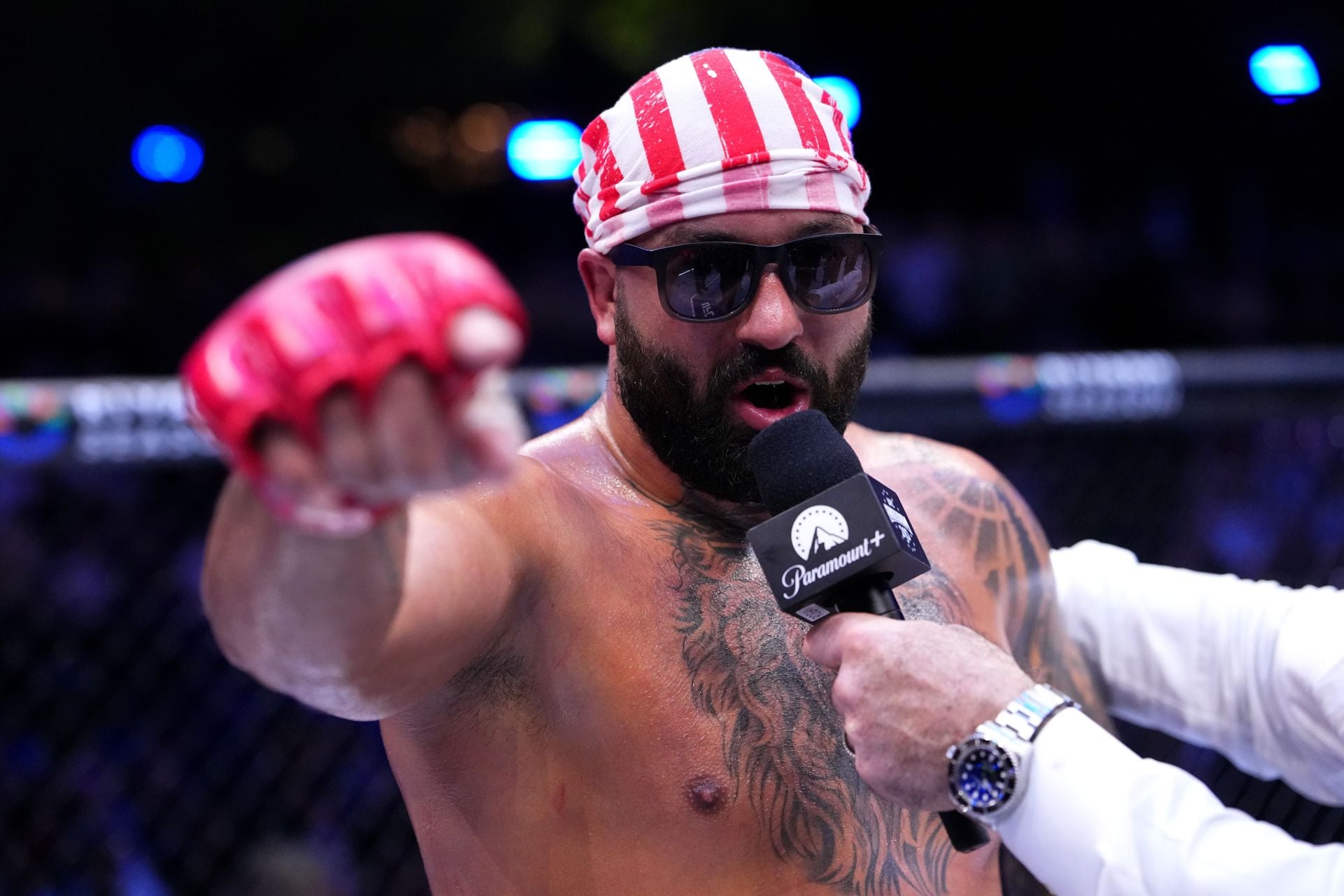
Josh Hokit has turned the lead-up to UFC 334 into a personal crusade, declaring himself "at war" with Ciryl Gane and, in a striking escalation, directing his verbal fire at the French heavyweight's mother. The American fighter, a former college wrestling standout and briefly a San Francisco 49ers practice-squad hopeful before committing fully to mixed martial arts, has spent fight week treating a warning from Gane's camp as an invitation rather than a deterrent. What began as routine pre-fight trash talk has spiralled into one of the more personal and uncomfortable feuds of the year, with Hokit openly vowing to target Gane's family in the build-up to their heavyweight bout. The contest itself, scheduled for UFC 334, now carries an added layer of hostility that has dominated the promotional narrative.
The background to the feud lies in the combustible intersection of two very different trajectories. Gane, a former interim UFC heavyweight champion and one of the most technically refined strikers in the division, has long been marketed as a calm, cerebral presence who rarely takes the bait in pre-fight exchanges. Hokit, by contrast, arrives with a brash, wrestling-first identity and a reputation for saying whatever he believes will unsettle an opponent. According to the context surrounding fight week, a member of Gane's team reportedly issued a warning to Hokit to keep the trash talk respectful, particularly regarding family. Rather than heeding it, Hokit appears to have interpreted the caution as a challenge, doubling down on his rhetoric and framing the entire encounter as a war rather than a sporting contest.
The specifics of Hokit's remarks have circulated widely across fight-week content and social media, with the American repeatedly invoking Gane's mother as a focal point of his psychological campaign. Gane has historically been reluctant to engage in personal attacks, preferring to let his fighting speak for itself, and his response has been measured rather than inflammatory. The UFC has not publicly signalled any disciplinary intervention at the time of writing, though the promotion closely monitors conduct that crosses into personal or family territory. It is worth emphasising that the substance of the dispute rests on public statements and reported warnings rather than any verified private exchange, and much of the fight-week narrative has been shaped by the promotional ecosystem that rewards conflict. Hokit's camp has framed his approach as mental warfare rather than genuine malice, a distinction that has done little to cool the temperature.
Reaction within the sport has been divided. Some fighters and analysts have dismissed Hokit's tactics as manufactured heat designed to raise his profile in a division crowded with bigger names, noting that personal provocation reliably generates engagement and pay-per-view interest. Others have criticised the targeting of an opponent's mother as a line that should not be crossed, arguing that it cheapens the sport and invites real-world consequences beyond the cage. Gane's supporters have largely rallied behind the Frenchman, framing his restraint as evidence of professionalism and predicting that the animosity will backfire on Hokit once the cage door closes. The bout's stakes have intensified accordingly: a win for Hokit would validate both his promotional bravado and his wrestling-heavy style, while a defeat would leave him exposed as a fighter who talked his way into a spotlight he could not hold.
The episode fits a well-worn pattern in combat sports, where personal grudges are routinely leveraged as marketing tools. The UFC has long benefited from athletes who blur the line between promotion and provocation, and family-directed trash talk has surfaced repeatedly across the sport's history, often drawing condemnation before being quietly absorbed into the pre-fight spectacle. At the same time, the modern media environment amplifies every remark instantly, meaning a single comment can travel further and faster than the fight itself. For a heavyweight division in flux and searching for fresh contenders, the attention is welcome, even if the method is divisive. Hokit's willingness to court controversy also reflects a broader reality for fighters on the roster's fringes: notoriety can be as valuable as a winning streak when it comes to securing bookings and visibility.
Comparisons have inevitably been drawn to earlier feuds in which fighters invoked opponents' families, with the most famous examples becoming part of promotional folklore while also prompting calls for stronger codes of conduct. Historically, the UFC has intervened only when remarks veered into threats or discriminatory territory, leaving most personal jabs to be settled inside the octagon. Gane's measured posture echoes the approach of other elite heavyweights who have chosen to answer provocation with performance rather than rhetoric. The dynamic places additional pressure on referees and officials to keep the contest clean, since heightened animosity can produce reckless exchanges. Fighters who have crossed such lines in the past have found that the tactic cuts both ways, energising an opponent and inviting scrutiny of their own conduct.
What happens next will be determined inside the cage at UFC 334, where Hokit's wrestling and pressure will be tested against Gane's polished kickboxing and movement. A decisive performance from Gane would likely end the feud with a emphatic answer, while a Hokit victory would extend the narrative well beyond the final bell. The UFC is expected to monitor the situation for any further escalation during fight week and could address conduct if remarks cross established boundaries. Regardless of the result, the episode will feed into ongoing debate about where promotional freedom ends and respect begins in a sport built on confrontation. For Hokit, the gamble is clear: he has staked his credibility on backing up his words, and the cage will render the only verdict that ultimately matters.