Why reindeer eyes turn deep blue in winter and how it helps them see in Arctic twilight
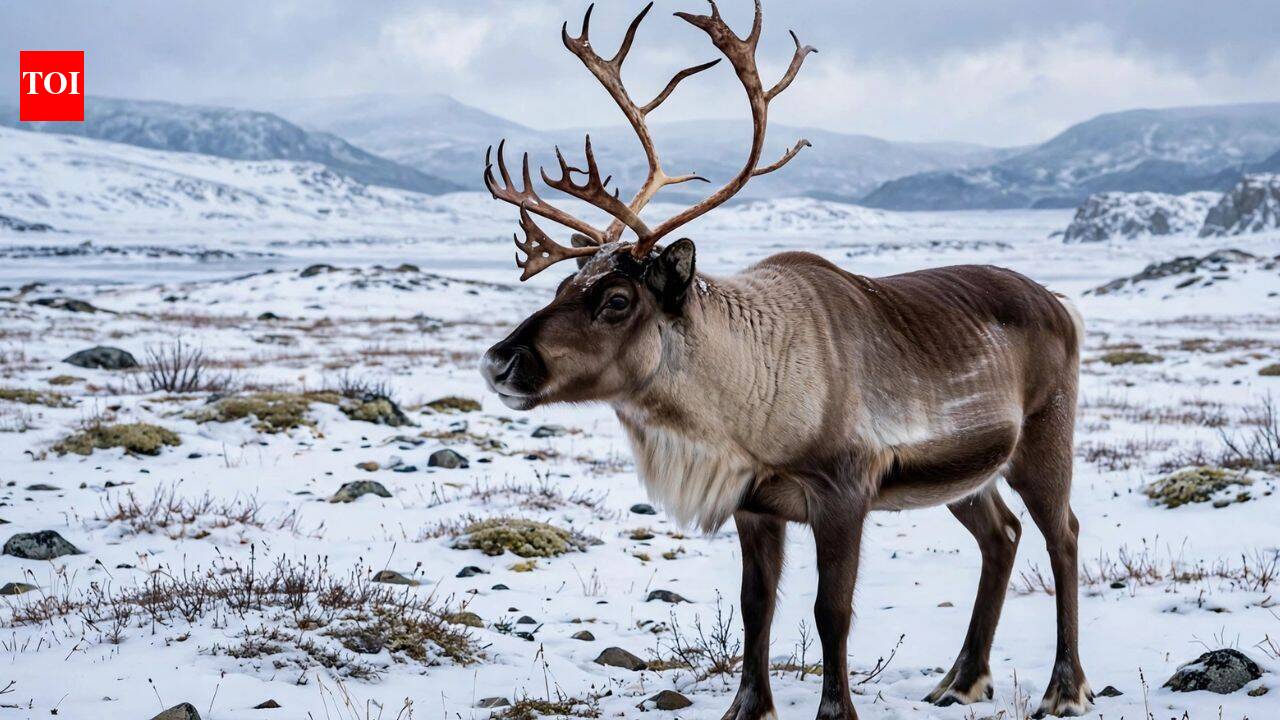
Scientists have established that the eyes of reindeer change colour dramatically with the seasons, shifting from a golden or amber hue in summer to a deep, vivid blue in the darkness of the Arctic winter. This remarkable transformation, documented in research on animals in northern Norway, is one of the most striking examples of how a mammal's visual system can adapt to extreme environmental conditions. The colour change is not merely cosmetic, it directly alters how light enters the eye, helping the animals see in the dim twilight that dominates the polar winter. Reindeer, also known as caribou in North America, are the only mammal known to undergo such a seasonal shift in eye colour, making them a subject of intense interest among vision researchers and evolutionary biologists.
The phenomenon occurs in a reflective tissue behind the retina known as the tapetum lucidum, which is common in many nocturnal animals and is responsible for the eerie glow seen when light strikes their eyes at night. In reindeer, this mirror, like layer sits behind the light, sensing cells of the retina and bounces incoming light back through them, effectively giving the photoreceptors a second chance to capture scarce photons. During the long, sunlit days of the Arctic summer, the tapetum takes on a golden appearance, but as winter approaches and daylight dwindles, pressure inside the eye increases and the tissue compresses. This physical change alters the spacing of collagen fibres within the tapetum, shifting the wavelengths of light it reflects and producing the characteristic deep blue colour.
The blue colour is not simply a change in appearance but a functional adaptation tied to the quality of winter light in the high Arctic. During the polar winter, the sun barely rises above the horizon, and much of the available illumination comes from blue, rich twilight and scattered light rather than direct sunlight. Because the blue, shifted tapetum reflects shorter wavelengths of light more efficiently, it directs more of this scarce blue light back onto the retina, where it can be detected by the animal's photoreceptors. Researchers have suggested that this improved sensitivity may help reindeer spot predators, find food, and navigate across snow, covered terrain during the prolonged darkness. The change is thought to be driven largely by mechanical pressure within the eye rather than by a purely biological or hormonal trigger.
The findings, published in leading scientific journals and widely covered by international media, have drawn interest from researchers studying both animal vision and human eye disease. Because the reindeer's colour shift is linked to elevated pressure inside the eye, some scientists have noted parallels with conditions such as glaucoma in humans, where increased intraocular pressure damages the optic nerve. While the reindeer's adaptation is a normal, reversible seasonal process rather than a disease, understanding how the animal tolerates these pressure changes without apparent harm could offer indirect insights into how eye tissues respond to stress. Conservation groups have also highlighted the research as an argument for protecting Arctic habitats, noting that changes in snow cover, temperature, and light conditions driven by climate change could disrupt the finely tuned cues that govern this adaptation.
This discovery fits into a broader and growing body of research on how animals adapt their senses to extreme and changing environments. From migratory birds that navigate using Earth's magnetic field to deep, sea creatures that produce their own light, biologists continue to uncover sensory mechanisms that far exceed human capabilities. Arctic species in particular are becoming a focus of study because the region is warming faster than almost anywhere else on Earth, placing intense pressure on animals adapted to highly specific conditions. The reindeer eye research adds to concerns that climate change may be altering the timing and intensity of seasonal light in ways that could affect Arctic wildlife. It also serves as a reminder that many evolutionary adaptations remain undiscovered, particularly in remote and harsh environments.
The reindeer's ability to change its eye colour was not always understood, and earlier observers of Arctic wildlife noted the animals' shifting eye shine without being able to explain it. Over time, careful anatomical and optical studies revealed the underlying mechanism, transforming a longstanding curiosity into a well, documented example of biological adaptation. Similar seasonal and environmental adaptations have been recorded in other species, such as fish whose visual pigments adjust to different depths and light conditions, and birds whose colour vision is tuned to particular habitats. The reindeer case stands out because the change is so visually dramatic and so clearly linked to the extreme light cycle of the polar regions. It has become a classic illustration in the study of sensory ecology, the field that examines how organisms perceive and respond to their surroundings.
Looking ahead, scientists are expected to continue investigating how reindeer eyes respond to a rapidly changing Arctic, including whether warming temperatures and altered snow patterns could interfere with the pressure, driven mechanism behind the colour shift. Researchers may also examine whether other Arctic mammals possess similar, as, yet, undetected adaptations, and whether the reindeer's tolerance of pressure changes can inform medical research on the human eye. As satellite monitoring and field studies expand across the polar north, the coming years are likely to bring more detailed data on how light, temperature, and biology interact in one of the planet's most demanding environments. For now, the reindeer's deep blue winter eyes remain a powerful symbol of how life adapts to even the darkest and coldest corners of the Earth.