Why claims that China’s BeiDou satellite was refuelled in orbit could change space race
Research papers circulating in the open, source domain suggest that China may have carried out a historic in, orbit refuelling operation involving a BeiDou navigation satellite, with the manoeuvre reportedly taking place in February last year. If confirmed, the operation would mark one of the first known instances of a satellite being refuelled while in orbit, a technological feat that has long been pursued by major spacefaring nations. The significance lies not merely in the engineering achievement but in its strategic dimensions, since the ability to extend the life of satellites and manoeuvre them at will carries profound military and intelligence implications. The claims have drawn attention from space policy analysts, defence establishments and rival space programmes alike, precisely because they touch on the delicate balance of power in outer space. For India, which operates its own regional navigation constellation, the development is being watched closely as a signal of where the global space race is heading.
The BeiDou system, formally known as the BeiDou Navigation Satellite System, is China's homegrown alternative to the American GPS and is now a fully operational global navigation network. It provides positioning, navigation and timing services used in everything from civilian smartphones and transport logistics to military targeting and missile guidance. Because navigation satellites sit in precise orbital slots and have finite fuel for station, keeping, extending their operational life through refuelling has enormous value for any nation that depends on them. China has invested heavily in on, orbit servicing technologies, including robotic arms, docking mechanisms and autonomous rendezvous capabilities, through both its civilian and defence space programmes. The alleged refuelling of a BeiDou satellite fits into this broader push to make space infrastructure more resilient and longer, lasting.
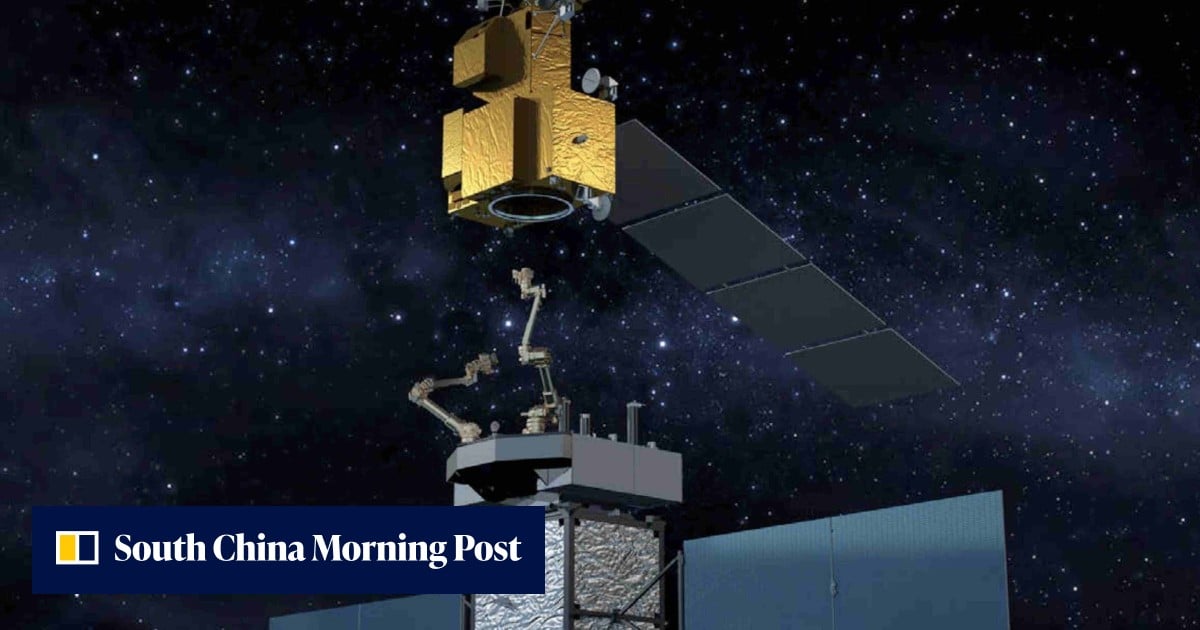
According to the research papers, the operation is believed to have involved a servicing spacecraft manoeuvring close to the target satellite, docking with it and transferring propellant, before separating again. Such a procedure demands extremely precise orbital mechanics, autonomous navigation and docking hardware capable of functioning in the vacuum of space without human intervention. Because the details have emerged through academic and analytical literature rather than an official announcement, independent verification remains limited and many specifics are still unclear. Space, tracking organisations and amateur satellite observers often detect unusual orbital manoeuvres before governments acknowledge them, and the reported movements have been cited as consistent with a refuelling profile. What is well established is that China has been testing and demonstrating on, orbit servicing technologies for several years, making the reported event plausible within its existing capabilities.
Reactions to the claims have been mixed, ranging from technical admiration to strategic alarm. Analysts in the United States and other Western nations have long warned that the same robotic technologies enabling refuelling could also be used to inspect, disrupt, move or disable another country's satellites. Because a refuelling craft must be able to approach and dock with a satellite, it could in principle approach a hostile satellite in a similar manner, raising the spectre of space, based coercion or warfare. Some experts describe the reported operation as a potential game, changer that blurs the line between peaceful servicing and offensive capability. Others caution against alarmism, noting that on, orbit servicing is a legitimate and environmentally useful technology that can reduce space debris by extending satellite lifespans.
This development fits into a much larger trend of intensifying competition in outer space among the United States, China, Russia and emerging players like India. The US has its own on, orbit servicing and refuelling programmes, both government, led and commercial, while Russia has demonstrated satellite inspection manoeuvres that alarmed Western observers. India, meanwhile, has expanded its spatial capabilities with its own navigation constellation, NavIC, and has tested anti, satellite technology, signalling that it too intends to be a serious space power. In this environment, any breakthrough in satellite servicing quickly becomes a matter of national security rather than mere scientific curiosity. The growing militarisation of space, coupled with the absence of a comprehensive binding treaty governing orbital weapons and servicing activities, makes every such advance politically charged.
Historically, the refuelling of satellites in orbit has been an elusive goal that space agencies have pursued for decades. The idea dates back to the early space age, when planners imagined servicing stations that could repair and replenish spacecraft, much like a garage for cars, but the technical and cost barriers proved formidable. NASA experimented with servicing through the Shuttle programme, most famously during the Hubble Space Telescope repair missions, which demonstrated that humans could maintain satellites in orbit. Robotic refuelling without astronauts, however, has remained far more difficult because of the precision required and the absence of standardised docking interfaces across satellites. Several demonstration missions in recent years have attempted to advance the technology, but a verified refuelling of an operational navigation satellite would represent a genuine leap forward.
What happens next will depend largely on whether China officially confirms the operation and whether independent observers can verify the details. If confirmed, it is likely to accelerate investment in on, orbit servicing by other space powers, trigger fresh debates in international forums about the militarisation of space, and encourage the development of defensive countermeasures. India, with its expanding space ambitions and its own navigation and reconnaissance assets, may be compelled to examine similar capabilities or protective measures for its satellites. The absence of clear international rules on close, proximity operations means that such technologies will continue to advance in a regulatory grey zone. Ultimately, the reported refuelling of a BeiDou satellite may be remembered less as a single technical feat and more as a milestone that pushed the world further into a new era of strategic competition above the atmosphere.