No action but endless talks, is Mecca defence agreement a pact without an impact?
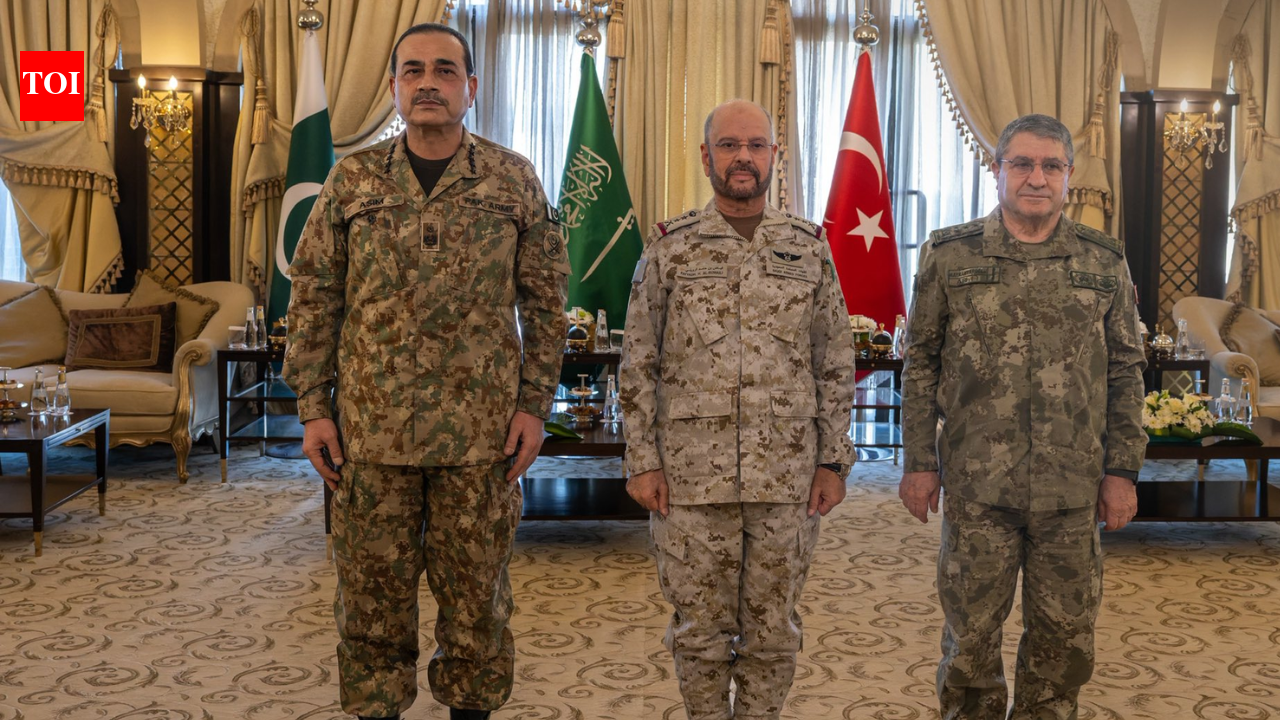
For years, the so, called Mecca defence agreement between Saudi Arabia and Pakistan has been presented as a cornerstone of Riyadh's security architecture, yet as Houthi missiles and drones continue to strike southern Saudi Arabia, a glaring question has emerged from the crisis: where is Pakistan? The pact, which was discussed and broadly outlined as a mutual defence understanding between the two nations, has produced no visible military response from Islamabad even as Saudi territory faces repeated aerial attacks. The arrangement was widely understood to commit Pakistan to the defence of Saudi Arabia, particularly in the event of external aggression against the kingdom. Despite this, there has been no deployment of Pakistani forces, no activation of joint defence mechanisms and no publicly acknowledged operational role for Pakistan in protecting Saudi airspace. The gap between the agreement's stated promise and the reality on the ground has led analysts to question whether the Mecca pact is a security guarantee in name only.
The background to the agreement lies in decades of close Saudi, Pakistani ties built on shared religious affinity, economic dependency and military cooperation. Pakistan has long supplied military advisers and trainers to Saudi forces, and thousands of Pakistani troops have been stationed in the kingdom over the years under various bilateral arrangements. The relationship was further cemented by Saudi financial assistance to Pakistan during periods of economic stress, creating an expectation of reciprocity in security matters. When the Mecca defence understanding was announced, it was seen as formalising a de facto partnership that had existed informally for decades. However, the agreement was never followed by a detailed, publicly available operational framework, leaving its actual obligations ambiguous and open to interpretation. That ambiguity has now become its central weakness as Saudi Arabia faces a sustained campaign of missile and drone strikes from Houthi forces in neighbouring Yemen.
Key details surrounding the agreement remain murky, largely because neither side has disclosed the full text or specific clauses. It is well established that the understanding was reached during a period of heightened regional tensions, when Saudi Arabia was seeking reliable allies beyond its traditional Western partners. Pakistan, for its part, has consistently balanced its relationship with Saudi Arabia against its ties with Iran, a delicate diplomatic position that complicates any overt military commitment against Iran, aligned Houthi forces. Pakistan's military has reportedly been cautious about being drawn into the Yemen conflict, wary of domestic political backlash and the risk of igniting sectarian tensions at home. The Houthis, meanwhile, have continued their attacks on Saudi infrastructure and cities, including targets in the south, without any evident deterrence from the Mecca pact. This disconnect between the agreement's rhetoric and the absence of action has become increasingly difficult to ignore.
Reactions to Pakistan's apparent passivity have ranged from quiet disappointment in Riyadh to pointed criticism from regional commentators and security analysts. Some observers argue that Pakistan's unwillingness to act reflects a broader recalibration of its foreign policy, prioritising its own economic and security crises over distant commitments. Others suggest that Saudi Arabia itself may not have formally invoked the agreement, making Pakistani inaction technically defensible while still politically awkward. There have also been suggestions that the pact was always more symbolic than operational, designed to signal solidarity rather than to serve as a binding war, fighting commitment. Pakistan's continued diplomatic silence on the matter has done little to clarify its position, leaving room for speculation about behind, the, scenes negotiations. Whatever the explanation, the episode has exposed the limits of paper guarantees in a region where threats are immediate and concrete.
The Mecca pact's uncertain impact fits into a larger trend of security agreements that promise much but deliver little when tested. Across the Middle East and South Asia, defence pacts are often signed for political signalling, domestic consumption or diplomatic leverage rather than as genuine operational blueprints. Saudi Arabia has sought similar arrangements with other partners, while Pakistan has its own web of defence understandings that rarely translate into decisive action. The broader regional environment, marked by shifting alliances, the aftermath of the Yemen war and evolving relations between Gulf states and Iran, further erodes the value of static agreements. In this context, the Mecca pact may be less a failure than a symptom of a wider problem: the gap between formal commitments and the political will to honour them. For Saudi Arabia, that gap is now being measured in missile impacts and drone strikes.
Historically, Pakistan has faced similar dilemmas when called upon to honour defence commitments that conflicted with its national interests. Its participation in the Saudi, led coalition in Yemen was limited and largely non, combat, reflecting domestic opposition and strategic caution. In earlier decades, Pakistan contributed troops to Saudi Arabia under bilateral arrangements, but those deployments were typically defensive and limited in scope. The current situation echoes the dilemma Pakistan faced during the 1991 Gulf War, when it contributed forces but carefully calibrated its involvement to avoid entanglement in offensive operations. Comparisons have also been drawn to other regional pacts that faltered when their members faced real threats, including various Arab defence arrangements that never functioned as intended. The lesson from these precedents is that mutual defence treaties without clear triggers, joint planning and shared political will tend to remain aspirational documents rather than effective shields.
What happens next will depend largely on whether Saudi Arabia formally invokes the Mecca agreement and whether Pakistan chooses to respond in kind. Riyadh may press Islamabad for a clearer commitment, particularly if Houthi attacks intensify or expand to more sensitive targets. Pakistan, facing its own economic difficulties and internal security challenges, is likely to continue balancing its ties with Saudi Arabia and Iran, avoiding a decisive military role unless circumstances change dramatically. The agreement could be quietly renegotiated, reinterpreted or relegated to the background, with both sides preferring ambiguity over confrontation. If no action follows the endless talks, the Mecca defence agreement risks being remembered not as a shield but as a cautionary example of a pact without impact. For Saudi Arabia, the question of where Pakistan stands may ultimately matter less than the answer it has already received: words, so far, have not stopped missiles.