India Rebukes Shehbaz Sharif’s UN Remarks, Warns Pakistan That ‘Terrorism Will Have Consequences’
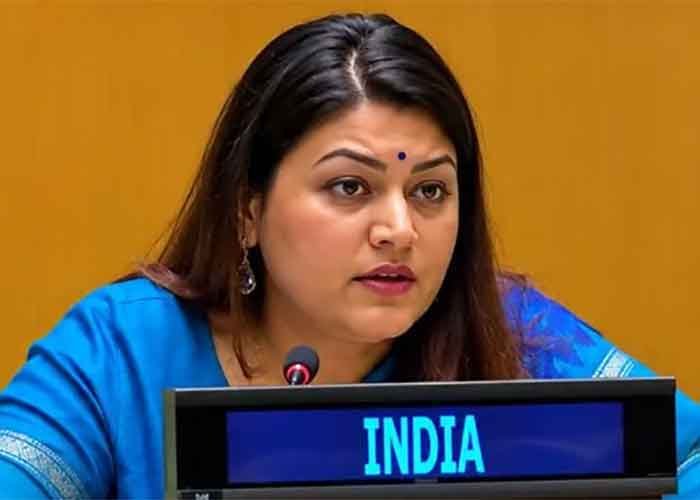
India has strongly rejected Pakistan Prime Minister Shehbaz Sharif's remarks at the United Nations General Assembly, with First Secretary at India's UN Mission Petal Gahlot accusing Islamabad of using the global forum to attack India while allegedly ignoring its own record on terrorism and human rights. The exchange took place during the high, level general debate at the UN headquarters in New York, where Sharif raised long, standing Pakistani allegations against India, including claims over Jammu and Kashmir. New Delhi's sharp response signalled its intent to push back firmly against what it regards as Pakistan's habitual use of multilateral platforms to divert attention from cross, border terrorism. The Indian diplomat warned that terrorism would have consequences, underlining that the international community must not allow such tactics to go unchallenged.
The confrontation is the latest chapter in a long history of tense India, Pakistan exchanges at the United Nations, where the two neighbours routinely trade accusations during the annual General Assembly session. Relations between the two countries have remained largely frozen since 2019, when India amended its Constitution to reorganise the erstwhile state of Jammu and Kashmir and Pakistan downgraded diplomatic ties in protest. Since then, official bilateral engagement has been minimal, with dialogue effectively suspended and both sides relying on international forums to press their positions. Pakistan has consistently sought to internationalise the Kashmir dispute, while India has maintained that the issue is strictly bilateral and that Pakistan must first end its support for cross, border militancy.
In its response, the Indian side stressed that Pakistan's leadership was using the UN podium to level unfounded allegations rather than address the pressing concerns of its own people. India has long accused Pakistan of harbouring and sponsoring terror groups that carry out attacks on Indian soil, a charge Islamabad routinely denies. New Delhi has also pointed to Pakistan's internal challenges, including economic instability and questions over the treatment of minorities, as evidence that its neighbour's criticisms are diversionary. The Indian diplomat's remarks underscored that the credibility of any nation raising human rights concerns at the United Nations depends on its own conduct at home and its adherence to international norms against terrorism.
Reactions to the exchange reflected the entrenched positions of both sides, with Pakistani officials continuing to describe Kashmir as a disputed territory and calling for international intervention. India, for its part, received support from a section of the international community that has increasingly emphasised the need to combat terrorism in all its forms and manifestations. The Indian warning that terrorism will have consequences carried an implicit message that New Delhi reserves the right to act against threats to its national security, a stance it has articulated after past attacks. The episode is unlikely to alter the fundamental deadlock in bilateral ties, but it reinforced India's determination to counter Pakistan's narrative at every available forum.
This latest clash fits into a broader pattern of deteriorating India, Pakistan relations, which have been marked by military tensions, border skirmishes and mutual distrust over the past several years. Talks on trade, water sharing and people, to, people contacts have stalled, and the two countries have repeatedly blamed each other for ceasefire violations along the Line of Control. India has also grown more assertive in highlighting Pakistan's alleged links to terrorism at forums such as the United Nations, the Shanghai Cooperation Organisation and the BRICS grouping. Meanwhile, Pakistan has sought to rally support among sympathetic nations, though its ability to shape global opinion on Kashmir has diminished amid its own domestic and economic difficulties.
Historically, India and Pakistan have used the UN General Assembly as a stage for competing narratives, most notably during the 1965 and 1971 wars and the subsequent Kargil conflict of 1999. In recent decades, India has shifted its strategy away from lengthy debates over Kashmir at the United Nations, arguing that the matter is internal to its constitutional framework and not subject to external mediation. Pakistan, in contrast, has repeatedly attempted to revive third, party involvement, a move New Delhi has consistently resisted. The current exchange echoes earlier cycles of accusation and rebuttal, with each side calibrating its remarks for domestic audiences as well as international listeners.
Looking ahead, India is expected to continue countering Pakistan's assertions in international forums while maintaining that meaningful engagement depends on an end to cross, border terrorism. Pakistan's leadership, meanwhile, is likely to persist in raising Kashmir at multilateral gatherings, though such efforts have yielded limited concrete outcomes in recent years. Any future thaw will depend on a range of factors, including security conditions on the ground, political developments in both capitals and the willingness of either side to revisit the terms of engagement. For now, the exchange at the United Nations has reinforced a familiar pattern of hostility, leaving little immediate prospect of a diplomatic breakthrough between the two nuclear, armed neighbours.