'Vishwanath And Sons' star Suriya reveals why he stopped watching his father Sivakumar’s films: 'My ego was triggered'
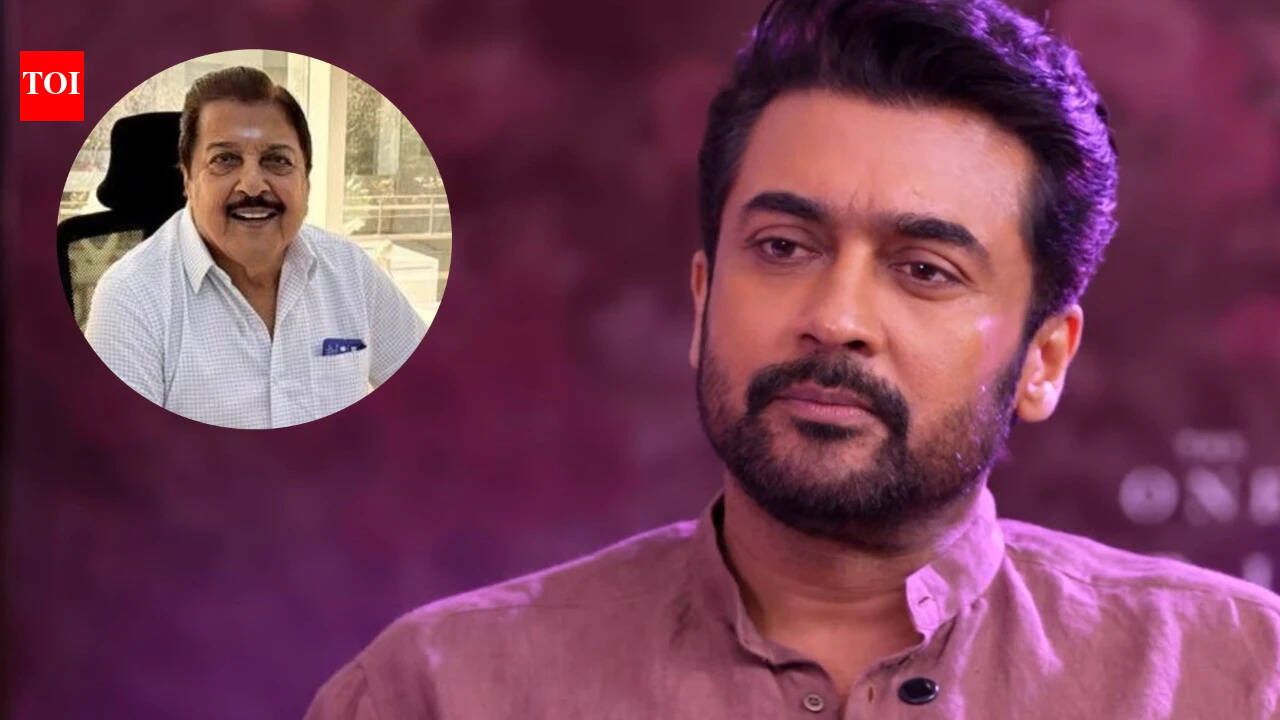
Actor Suriya, one of Tamil cinema’s most bankable stars, has opened up about a deeply personal aspect of his creative journey, revealing that he deliberately stopped watching his legendary father, Sivakumar’s, films early in his career because his own ego was triggered by the comparisons. The admission, made during a recent promotional interaction for his upcoming project, sheds light on the psychological burden of being the son of a revered actor who starred in over 200 films. Suriya explained that the constant shadow of his father’s formidable legacy made it difficult for him to find his own footing as an artist. Instead of drawing inspiration, watching his father’s work reportedly stirred a sense of self, doubt and competitive anxiety, which he chose to address by creating a distinct emotional distance.
The context of this revelation is rooted in the unique dynamics of the Tamil film industry, where family legacies often dictate career trajectories. Sivakumar, a celebrated actor of the 1970s and 1980s, was known for his versatile roles in both commercial and critically acclaimed cinema, establishing a name that his sons, Suriya and Karthi, would later inherit. For Suriya, who made his debut in 1997, the initial years were fraught with struggle and lukewarm responses, making the inevitable comparisons to his father’s command over the screen even more painful. He has previously spoken in interviews about how he felt lost in the industry’s expectations, trying to emulate a style that was not his own. This new, candid remark about his ego being triggered offers a rare glimpse into the internal conflict that shaped his formative years as a performer.
In his recent statements, Suriya elaborated on the specific emotional mechanics of his decision, describing how viewing his father’s performances made him feel inadequate rather than motivated. He noted that the technical brilliance and natural ease of Sivakumar’s acting created a psychological barrier that he could not cross at the time. The actor reportedly said that stepping away was a necessary act of self, preservation, allowing him to learn his craft without the intrusive noise of familial comparison. He also acknowledged that this distance was not born of disrespect but from a fierce desire to establish a separate identity, one that could stand on its own merits. This period of self, imposed exile from his father’s filmography, he suggested, was crucial in helping him develop the distinct acting style that later defined hits like Kaakha Kaakha and Ghajini.
The reaction to Suriya’s confession has been significant among fans and industry observers, who see it as a refreshingly honest take on nepotism and legacy in Indian cinema. Social media discussions have praised the actor for his vulnerability, noting that his journey from an outsider, inside the family to a top, tier star is a testament to his resilience. Many drew parallels to other second, generation actors who have spoken about the pressure of a famous surname, but few have articulated the specific trigger of their ego as candidly. The revelation also adds a new layer to public appreciation of Sivakumar, who has often been credited for his humility and for encouraging his sons to forge their own paths. Within the industry, the story has sparked conversations about the unspoken mental health challenges faced by star kids who must constantly prove their worth.
This introspective interview arrives at a crucial juncture in Suriya’s career, as he navigates a period of mixed box, office results after a string of ambitious projects. His recent films have attempted to experiment with genre and scale, yet the audience response has been inconsistent, prompting a strategic rethink in his choice of scripts. Suriya’s honesty about his past ego and his current state of mind suggests an artist in deep reflection, keen to reconnect with the raw fundamentals of his craft. He has often spoken about reinventing himself, and this confession feels like a deliberate step towards shedding any remaining psychological baggage. The narrative aligns with a broader trend in the industry where leading actors are increasingly prioritizing authenticity in their public personas over polished, promotional rhetoric.
Historically, the relationship between actor, parents and their offspring in South Indian cinema has been complex, with many sons choosing to debut under their fathers’ production banners or in remakes of their fathers’ hits. However, Suriya’s deliberate avoidance of his father’s filmography stands in contrast to this trend, marking him as an anomaly who sought to break the cycle of mimicry. Actors like Kamal Haasan have spoken of being inspired by their predecessors, but Suriya’s path was one of active avoidance, a strategy that yields a unique case study in identity formation. His career trajectory, from the failure of his early films to the icon, status he achieved with the role of a psychopath in the Telugu remake of Ayan, demonstrates that this method, while painful, was ultimately effective. Sivakumar himself has always maintained a graceful silence on his sons’ careers, allowing them to succeed or fail on their own terms, which made Suriya’s internal struggle a solitary one.
Looking ahead, Suriya’s candid admission is likely to endear him further to a family, audience that appreciates his groundedness, even as it reshapes how critics view his past work. His immediate schedule is packed with high, profile releases, including a major science, fiction epic and a sequel to a beloved blockbuster, which will test his box, office pull in a rapidly changing market. The actor is also expected to formally respond to fans’ queries about his father in an upcoming fan, meet event, which could provide additional closure on this topic. Ultimately, this revelation serves as a reminder that the pressures of legacy can stifle even the most talented performers, and that true growth often requires the courage to look away from the past. For Suriya, the narrative has come full circle, from avoiding his father’s shadow to confidently acknowledging it as a part of his own history, a story that will likely inspire many other young actors facing similar dilemmas.