Scientists discovered that animal poop travelled across oceans 540, million, years ago and triggered the evolution of life on earth
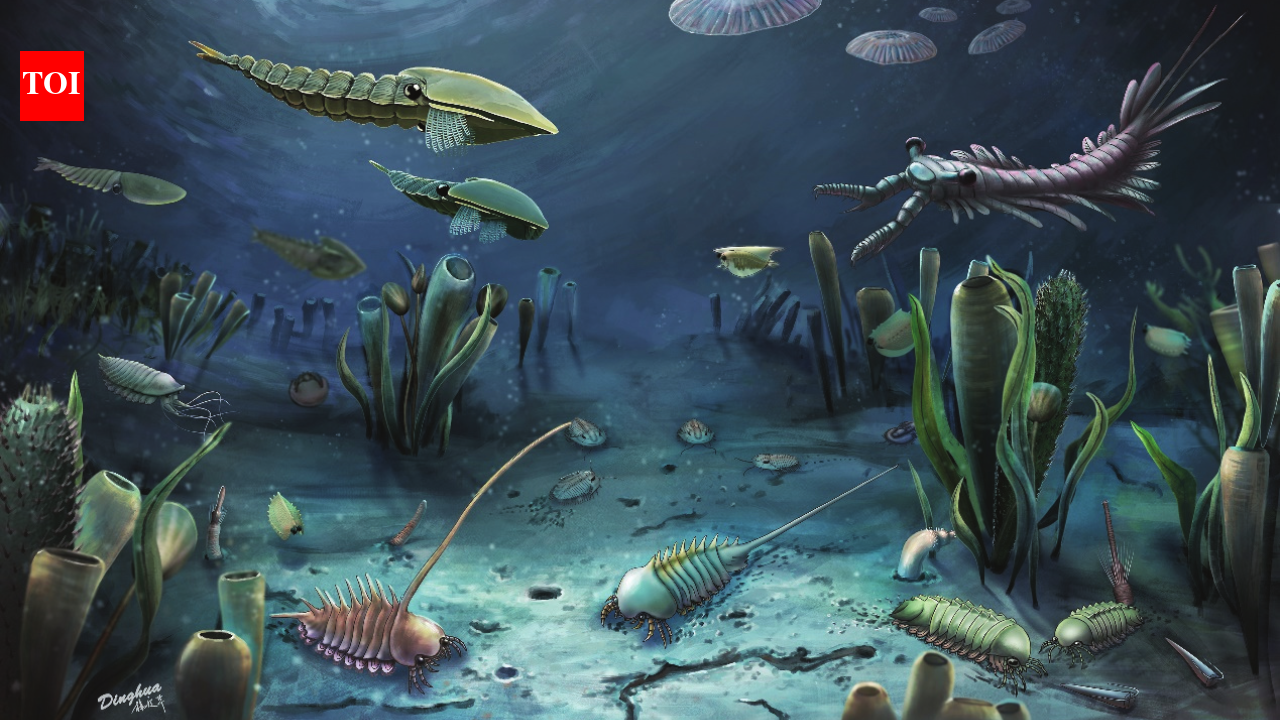
Around 540 million years ago, Earth underwent one of the most dramatic biological transformations in its history, an event known as the Cambrian explosion, which saw the sudden appearance of complex, multicellular life forms in the fossil record. According to a new scientific study, a seemingly improbable catalyst for this evolutionary leap was the humble animal dropping, with researchers proposing that fecal matter traveled across ancient oceans to fertilise nutrient, poor waters. The theory suggests that the movement of these organic packages, rich in phosphorus and nitrogen, effectively redistributed essential nutrients on a global scale, breaking a long, standing chemical stalemate in the prehistoric seas. This groundbreaking hypothesis, detailed by an international team of geologists and biologists, reframes our understanding of how animal life may have engineered its own rapid diversification. The findings indicate that the simple act of defecation, once life became mobile, may have provided the crucial kick, start needed for the explosion of biodiversity that followed.
For hundreds of millions of years before the Cambrian period, Earth’s oceans were largely dominated by single, celled organisms and simple microbial mats, with nutrient cycles moving at a glacial pace. The oceans during this earlier era were essentially stratified, with vital nutrients like phosphorus locked away in deep waters or tied up in dead organic matter that sank slowly to the seafloor. This slow biological pump meant that the sunlit surface waters, where life could thrive, remained relatively barren and nutrient, poor, limiting the size and complexity of any organisms that tried to evolve. The arrival of the first bilaterian animals—creatures with a distinct front and back, and a through, gut—marked a seismic shift in this dynamic. Unlike their sessile ancestors, these early animals moved, fed, and crucially, digested their food in a way that expelled waste in compact, dense pellets rather than as diffuse cellular debris.
The core of the new research explains how these fecal pellets transformed the marine nutrient cycle, acting like underwater conveyor belts that rapidly sank to the ocean floor. Because these pellets were dense and fast, sinking, they effectively bypassed the slow decomposition processes that previously kept nutrients trapped near the surface or in the deep. Upon reaching the seabed, the concentrated waste was broken down by microbes, releasing phosphorus and nitrogen into the surrounding sediments and pore waters, and crucially, these nutrients were then transported back to the surface via oceanic upwelling currents. This process, which the authors describe as a "bio, mixing" effect, created a more efficient global nutrient loop, delivering a steady supply of fertilizer to shallow, sunlit habitats. The result was a boost in primary productivity—the growth of phytoplankton—which in turn provided a larger food base for evolving animal life. This positive feedback loop, where more animals meant more poop, which meant more food, which meant more animals, is presented as a key acceleration mechanism for the Cambrian explosion.
While the scientific community has long debated the exact triggers of the Cambrian explosion, this study offers a unifying biological mechanism that ties together animal evolution with global geochemical cycles. Experts not involved in the research have reacted with cautious interest, noting that the hypothesis provides a testable framework for understanding a transition that has puzzled paleontologists for centuries. The paper is significant because it shifts the narrative from purely environmental triggers, such as rising oxygen levels, to a more biological and interactive model where animal life actively shapes its own destiny. The researchers have backed their claims with computer models of ocean circulation and comparisons to modern marine ecosystems, where similar nutrient, enrichment processes are observed in regions with dense populations of zooplankton. If validated, this new perspective could force a revision of how we view the relationship between early animal physiology and the broader Earth system.
This research sits within a larger trend of scientific inquiry that increasingly recognises the profound agency of life in shaping planetary conditions, a concept known as the Gaia hypothesis in its more extreme forms. Modern ecology already struggles with the consequences of nutrient pollution from human activity, where excess waste in waterways leads to algal blooms and dead zones, but this new study shows a positive version of that same principle in deep time. The findings also speak to current debates about the health of our modern oceans, particularly regarding the delicate balance of food webs and nutrient cycles that sustain fisheries. By understanding how a primitive biological process could have altered global chemistry on a vast scale, scientists are gaining insights into the fundamental resilience and interconnectivity of life on Earth. This prehistoric example of bio, geo, engineering demonstrates that even the most basic biological functions can have planetary, scale repercussions that persist for millions of years.
Historically, geologists have identified the Cambrian explosion as one of the five major evolutionary radiations in Earth’s history, but the lead, up to that event was often depicted as a slow arm race between predators and prey. Previous theories have focused on rising oxygen levels from photosynthetic bacteria or the evolution of hard body parts like shells as primary catalysts for the diversification. However, the new fecal, pellet theory provides a missing link, explaining why the diversification was so sudden and geographically widespread after nearly three billion years of simple life. The Cambrian period is unique in that it marks the first appearance of almost all modern animal phyla, a feat that is often considered biologically improbable without some kind of external forcing. This new study suggests that the forcing was not a single catastrophic event or a simple chemical change, but rather an emergent property of animal life itself. It adds a functional, almost logistical solution to the puzzle, showing that the efficiency of waste disposal was as important as the evolution of the organism itself.
Going forward, the research team plans to investigate ancient rock formations from the Ediacaran and Cambrian periods to search for fossilised fecal pellets, which would provide direct physical evidence to support their models. They are also looking to replicate their ocean chemistry simulations with more complex variables, including the movement patterns of early animals and the impact of different sediment types. The next few years will likely see increased collaboration between paleontologists, geochemists, and evolutionary biologists to test this theory against the existing fossil record. If confirmed, this discovery will not only rewrite the chapter on the Cambrian explosion but will also inform our understanding of how future biological innovation might again alter global cycles, for better or for worse. The study ultimately highlights a simple yet profound truth: that in the history of life, the most unassuming of actions—the passage of waste—may have been a fundamental driver of incredible complexity and beauty.