Russia frees former US Marine Robert Gilman after more than four years in prison
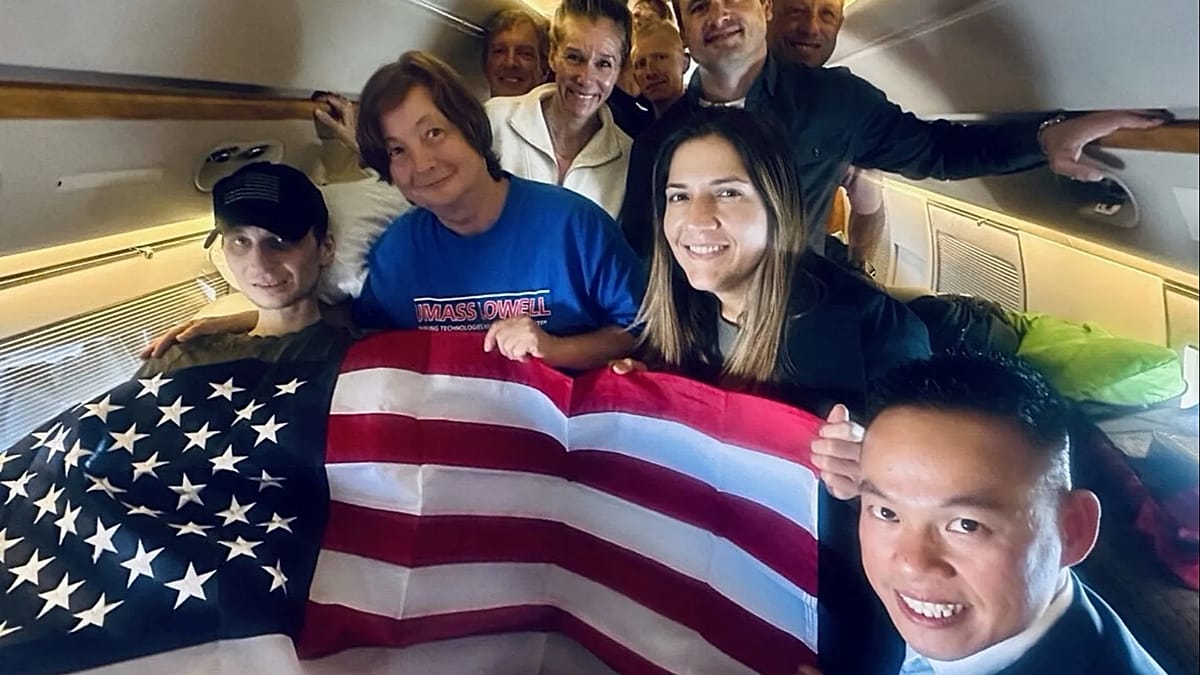
The United States has confirmed the release of former Marine Robert Gilman from Russian custody, ending a detention that spanned more than four years. Gilman, a US citizen, was arrested in 2022 in the city of Voronezh, located to the south of Moscow, following an altercation on a train that led to charges of assaulting a police officer. His release was secured as part of a broader diplomatic negotiation between Washington and Moscow, marking a rare moment of cooperation amid severely strained bilateral relations. The exact terms of his release, including any reciprocal concessions by the US government, have not been fully disclosed by officials on either side. His return to American soil was confirmed by family members and State Department representatives, who expressed relief after a prolonged legal ordeal.
The case against Gilman began with a routine incident that escalated dramatically, resulting in his arrest on charges that carried a potential sentence of several years in a Russian penal colony. Reports at the time indicated that the altercation occurred after a dispute on a long, distance train, with Russian authorities alleging that Gilman resisted arrest and struck an officer. Gilman’s family and legal team consistently maintained that the charges were exaggerated and that he was being used as a bargaining chip in the wider geopolitical standoff between the US and Russia. Over the course of his imprisonment, his case drew periodic attention from American lawmakers and advocacy groups focused on detained citizens abroad. Unlike some high, profile detainee cases, Gilman’s situation received comparatively less media coverage, but it remained a priority for US diplomatic channels.
According to statements from US officials, Gilman’s release came after months of quiet negotiations, with the final agreement involving a process similar to those used in previous prisoner exchanges. While neither government has published an official list of individuals involved in the trade, sources familiar with the matter have indicated that the arrangement involved the release of Russian nationals held in US custody. The White House has not yet issued a formal statement detailing the exchange, but a senior administration official described the outcome as the result of persistent engagement and direct communication at the highest levels. Gilman’s family, in a brief public message, thanked the US government and all those who worked tirelessly to secure his freedom. They also requested privacy as they focus on his reintegration and recovery from what they described as a physically and psychologically taxing imprisonment.
The release has been met with a mix of relief and cautious optimism among families of other Americans still detained in Russia, who see this as a positive sign that negotiations remain possible. Advocacy groups have used the moment to renew calls for the release of other US citizens, including those whose cases have been less publicly visible. In Washington, the development has been framed in general terms as an example of necessary diplomacy, even as lawmakers from both parties continue to criticise Russia’s treatment of foreign detainees. For the Biden administration, which has faced scrutiny over its handling of detained citizens, this release provides a tangible success story ahead of future political transitions. However, officials have cautioned against reading too much into the event, noting that each case is handled on a case, by, case basis.
This release fits into a larger pattern of periodic prisoner swaps between the US and Russia, which have become one of the few functional channels of communication between the two adversarial nations. Since the escalation of the conflict in Ukraine in 2022, diplomatic ties have been reduced to a bare minimum, with prisoner exchanges serving as the primary arena for direct negotiation. High, profile cases, such as those of basketball star Brittney Griner and journalist Evan Gershkovich, have made headlines, while lesser, known individuals like Gilman have often languished in the background. The exchange mechanism has evolved into a complex and carefully choreographed process, often involving third countries as intermediaries. Each successful swap reinforces the understanding that, despite deep enmity, both governments recognise the practical need to resolve certain humanitarian cases.
Historically, the US and Russia have engaged in dozens of such exchanges since the Cold War era, with the most famous involving spies and captured intelligence operatives. In recent years, the focus has shifted to civilians, including journalists, businessmen, and former military personnel, reflecting the changing nature of their rivalry. The case of Trevor Reed, a former Marine released in 2022, bears notable similarities to Gilman’s, including the nature of the charges and the length of detention. Likewise, the release of Paul Whelan in 2024 after years of imprisonment demonstrated that even the most difficult cases could be resolved through sustained negotiation. These precedents suggest that while the process is slow and fraught with political obstacles, it has a consistent track record of eventual resolution. Each case, however, is unique, and the timing of a release often depends on factors far beyond the individual’s circumstances, including broader geopolitical calculations.
Looking ahead, Gilman will now undergo a period of medical evaluation and reintegration support, coordinated by the US Department of Veterans Affairs and other federal agencies. His family has indicated that he will require time to adjust to life outside a Russian penal system, and mental health professionals will likely play a central role in his recovery. The immediate diplomatic aftermath will involve quiet follow, ups to ensure that the terms of the exchange are fully implemented on both sides. For other American families with loved ones in Russian custody, the coming weeks may bring renewed hope, though officials have offered no timetable for further releases. Ultimately, Gilman’s return underscores a grim reality: while individual cases can be resolved, the systemic practice of detaining Americans in Russia appears likely to continue as long as the broader geopolitical conflict remains unresolved.