
AI can do to lending, what UPI did to payments: RBI governor Sanjay Malhotra
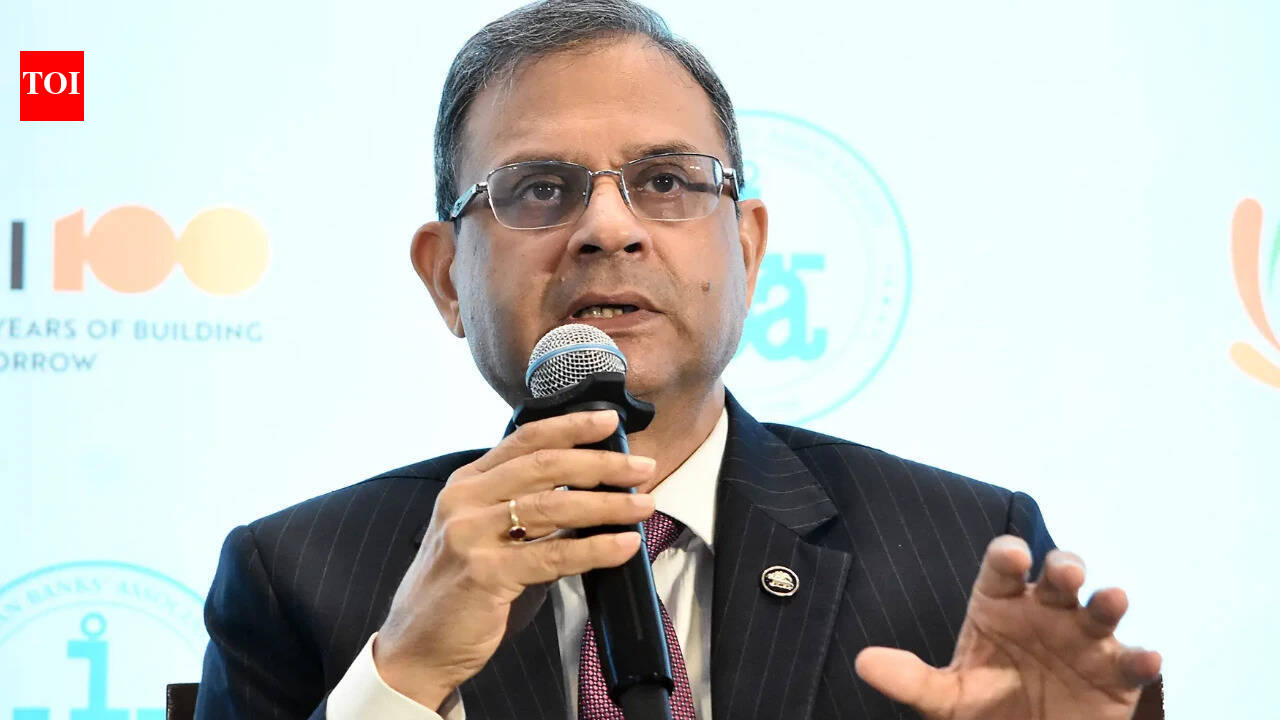
Reserve Bank of India Governor Sanjay Malhotra has made a powerful case for the transformative potential of artificial intelligence in the financial sector, comparing its anticipated impact on lending to the revolutionary effect the Unified Payments Interface had on digital payments in the country. Speaking at a banking conference in Mumbai, the governor articulated a vision where AI, driven data analysis and credit scoring could fundamentally alter how banks assess borrowers, potentially democratizing access to credit for millions of Indians who currently lack a formal credit history. He framed this as a monumental opportunity for the banking industry, arguing that the technology can streamline loan disbursal, reduce operational costs, and significantly mitigate risks associated with manual underwriting processes. However, he simultaneously issued a stark warning to financial institutions, urging them not to remain passive observers on the sidelines of this technological shift, lest they become obsolete in a rapidly evolving marketplace.
The governor’s remarks arrive at a critical juncture when Indian banks are already leveraging technology to expand their reach, yet the adoption of AI for core credit decisions has largely remained experimental. While the UPI system dismantled the barriers to real, time fund transfers by creating a unified, interoperable public infrastructure, the lending ecosystem still grapples with challenges related to data asymmetry and the exclusion of the informal sector from mainstream finance. Malhotra’s analogy serves as a clarion call for the industry to recognize that the next decade will be defined by embedded finance and algorithmic lending, where the ability to process vast amounts of unstructured data—from transaction patterns to mobile usage—will determine market leadership. He pointed to the success of the private sector in this arena as a proof of concept, noting that the central bank is keen to foster an environment where innovation can flourish without compromising systemic stability.
Addressing a gathering of top executives from public and private sector lenders, the governor elaborated on the dual nature of this technological leap, cautioning that the benefits of AI are not without significant governance challenges. He highlighted concerns regarding algorithmic bias, data privacy, and the inherent "black box" problem of AI systems, which can make it difficult to explain credit rejections or pricing decisions to customers. The central bank chief emphasized that the onus is on the banks to develop robust internal frameworks that ensure fairness and transparency, aligning machine, learning models with the regulatory principles of customer protection and financial inclusion. Furthermore, he stressed that the adoption of AI must not be seen purely as a cost, cutting mechanism but as a strategic tool to build a more resilient and predictive banking system that can identify stress in loan portfolios well before it manifests as defaults.
Industry reaction to the governor’s pronouncement was largely positive, with banking leaders and fintech innovators interpreting it as a green signal for accelerated investment in next, generation lending platforms. Senior executives in the room acknowledged that the current risk, management frameworks are often static and reliant on historical data, whereas AI offers a dynamic, real, time view of a borrower’s financial health. This shift is expected to drive a new wave of partnerships between traditional banks and technology startups, who possess the specialized algorithms required for alternative credit scoring. There is also a palpable sense of urgency among mid, sized lenders, who fear that a failure to adopt these tools will result in them being boxed out of the retail and micro, enterprise lending segments, which are currently the fastest, growing areas of credit demand in the Indian economy.
The broader context of this push for AI, led lending is the central bank’s own agenda to boost credit flow to underserved segments, including agriculture, micro, small and medium enterprises, and the self, employed. The Reserve Bank has repeatedly expressed concern about the widening gap between credit growth and the needs of the real economy, and AI is seen as the most viable solution to bridge this gap without requiring massive physical expansion of bank branches. By lowering the cost of underwriting, AI allows lenders to service smaller, ticket loans that were previously unviable, thereby deepening financial penetration in rural and semi, urban areas. Moreover, this aligns with the government’s broader digital public infrastructure strategy, where data is treated as a public good to be leveraged for economic development, similar to how the India Stack enabled the UPI revolution.
Looking back at the historical trajectory of banking technology, the governor’s comparison draws a direct parallel to the post, 2016 period when the sudden demonetization and the subsequent push for digital payments forced banks to adapt quickly to a new reality. That era saw the government and the RBI act as catalysts, building a payment rail that was free to use, which ultimately led to the exponential growth of platforms like Google Pay and PhonePe. The current situation with AI in lending reflects a similar inflection point, but with a key difference being that the private sector is leading the charge, and the regulators will likely need to play the role of an enabler drafting the rules of engagement. The lessons from the digital payments rollout have taught the financial system that innovation cannot be artificially held back, and that regulatory guardrails must be flexible enough to accommodate rapid technological iteration without being prone to systemic shocks.
Looking ahead, the immediate expectation is that the RBI will soon issue a more detailed policy framework or discussion paper on the responsible use of AI and machine learning in credit regulation, offering clarity on model risk management and data usage guidelines. Banks are expected to ramp up their hiring of data scientists and the re, skilling of existing underwriting staff to work alongside algorithmic tools, leading to a structural shift in the human capital composition of the banking workforce. The medium, term forecast suggests a significant reduction in loan processing times, potentially from days to minutes, for small, ticket loans, along with a corresponding decline in the cost, to, income ratios for banks that successfully execute their digital transitions. While the vision is clear, the path forward involves delicate balancing, as lenders will have to manage the regulatory expectations for transparency while leveraging the opaque yet powerful capabilities of deep learning models. Ultimately, the governor’s message is a unequivocal warning that the era of conventional banking is ending, and that embracing AI is not a strategic option, but a requirement for survival and relevance in the new financial order.